

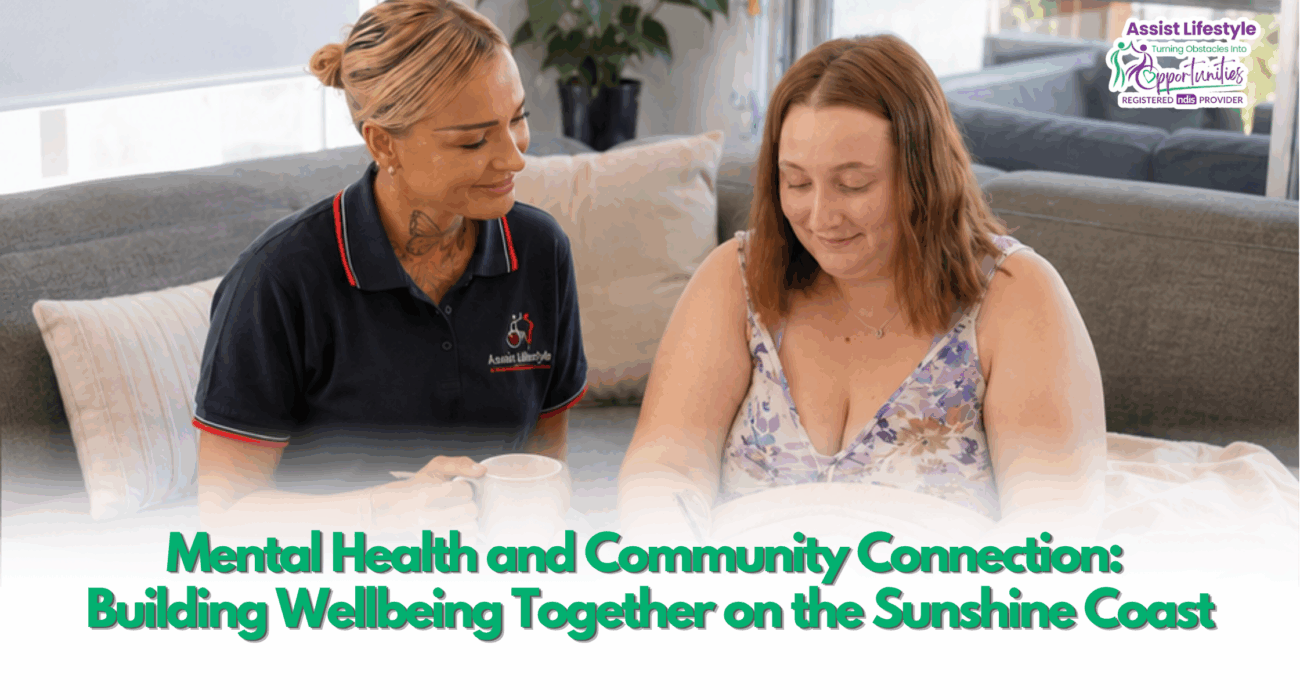
Sometimes connection starts with something simple.
A conversation. A walk. Sharing a meal. Joining an activity. Spending time with someone who understands you.
October is Mental Health Month, and World Mental Health Day is recognised on 10 October.
Mental Health Australia’s theme for 2026 is Together We Thrive, highlighting the importance of connection, belonging and community.
Why does community connection matter?
Feeling connected and having a sense of belonging can play an important role in wellbeing.
Community doesn’t have to mean attending large events or being surrounded by lots of people.
Your community might include:
family and friends
neighbours
cultural groups
hobby groups
sporting activities
volunteering
peer networks
disability groups
local events
online communities.
For people living with disability or psychosocial disability, the right community activities can also create opportunities to build confidence, explore interests and participate in everyday life.
Community participation should be personal
There isn’t one “right” way to participate in the community.
One person might enjoy attending a busy local event.
Someone else may prefer walking along the beach, visiting a quiet café, going shopping or attending a small hobby group.
Both are meaningful forms of community participation.
The important question is:
What matters to you?
Start with something you enjoy
Trying something new can feel easier when it connects with an existing interest.
If you enjoy animals, you might explore an animal-related community activity.
If you enjoy art, you might consider a creative group.
If you love being outdoors, you might start with a walk, garden, park or accessible outdoor activity.
Your first step doesn’t have to be big.
It might simply be attending an activity for 20 minutes and seeing how you feel.
How can NDIS Community Access support help?
Where it is appropriate to a participant’s NDIS plan and funding, disability-related support may assist the person to participate in community activities.
A support worker may assist a participant to:
attend community activities
go shopping
attend appointments
practise using public transport
participate in hobbies
explore new interests
build everyday skills
develop confidence in the community.
Good Community Access support shouldn’t simply be about taking someone from one place to another.
It should consider the participant’s goals, choices, interests, communication needs and independence.
What about psychosocial disability?
People living with psychosocial disability may experience different barriers to community participation.
For eligible NDIS participants, a Psychosocial Recovery Coach may support the participant to build capacity and resilience, organise supports, strengthen decision-making and connect with community, health and mental health services.
You can learn more from the NDIS guide to Psychosocial Recovery Coaching.
Recovery Coaching should be centred on the participant’s strengths, preferences and individual goals.
Five simple ways to explore community connection
1. Start with something you enjoy.
Choose activities that genuinely interest you.
2. Make the first step manageable.
You don’t need to commit to an entire day.
3. Bring someone you trust.
A friend, family member or support worker may help make a new experience more comfortable.
4. Go at your own pace.
Community participation looks different for everyone.
5. Recognise your progress.
Trying something new can be an achievement in itself.
NDIS Community Access on the Sunshine Coast
Assist Lifestyle supports participants across the Sunshine Coast, Noosa and Gympie with Community Access, Assistance with Daily Living, Support Coordination and Psychosocial Recovery Coaching.
Whether your goal is to explore a new activity, become more confident in the community or develop greater independence, support should begin with your goals and choices.
Looking for NDIS Community Access or psychosocial support on the Sunshine Coast? Contact Assist Lifestyle to discuss what meaningful community participation looks like for you.